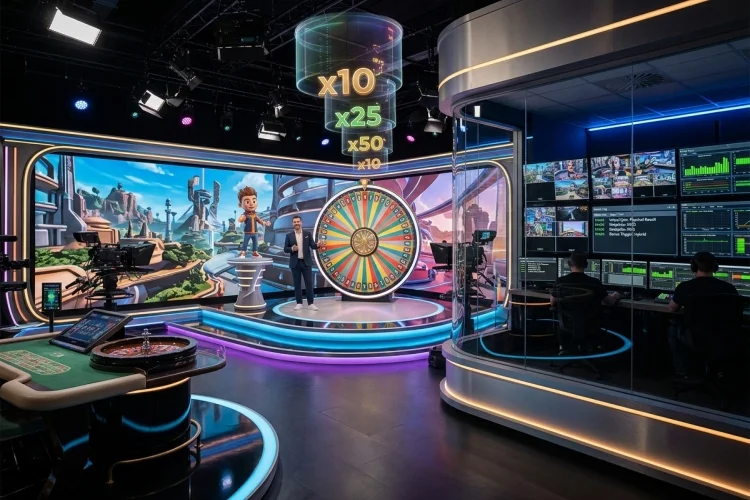

Live Casino

Live Casino

How Live Casino Game Results Are Recorded and Verified

A roulette ball lands on 17. Within seconds, the winning number appears in the interface, losing bets disappear, winning wagers are paid, and the round moves into your history. That smooth sequence hides a lot of technology.

Learning How Live Casino Game Results are recorded helps explain how a real physical event becomes a digital transaction that can later be reviewed.

Live casino systems may use recognition devices, table software, timestamps, game logs, surveillance cameras, and player transaction histories. These layers do different jobs, but together they create a record of what happened during each game.

Recording Starts Before the Final Result Exists

A live casino record does not suddenly appear after the winner is known.

Data is already being created when the round begins.

The system needs to identify the table, open a betting period, register accepted wagers, and eventually stop accepting new bets. Only then does the physical game determine the outcome.

For example, if ten players place different roulette bets, the platform must know which wagers belong to that specific spin.

When the ball finally lands, that winning number can be connected with all accepted bets for the round.

Pragmatic Play describes its live-casino platform as providing detailed betting histories and game statistics, while its back-end platform also includes reporting and operational notification tools for operators.

This illustrates an important idea: result recording starts with the round, not simply the winning number.

Recognition Technology Captures Physical Outcomes

The next challenge is telling software what actually happened at the table.

In card games, automated recognition equipment can identify game symbols and report them to the gambling system. GLI-19 specifically discusses automated recognition devices used with live dealer games and requires equipment that scans or detects cards to be tested for reliability.

Roulette may use a different combination of visual recognition, sensors, or specialised equipment depending on the system.

The important point is that the physical outcome needs to become structured data.

A human sees “Ace of Spades.”

Software needs something closer to a coded event that can be stored, processed, and associated with a particular game state.

This translation is what allows the interface to update automatically without requiring somebody to manually type every card or number.

The actual tecnology varies between providers, so OCR should not be treated as the only possible recognition method.

Game Rules Turn Recorded Events Into Results

Knowing which cards appeared does not automatically tell the system how much everyone should receive.

The game engine also needs the rules.

Imagine a baccarat round ending with Banker 7 and Player 5. The card-recognition system may report the physical cards, but another part of the software applies baccarat rules and identifies Banker as the winning hand.

The platform then evaluates all wagers linked to that round.

UK Gambling Commission RTS 5 states that gambling systems should process and settle bets in accordance with the published operator, betting, and game rules.

This distinction matters.

Recognition records the relevant physical event. The rules engine interprets that event. Settlement software determines how the wager should be financially resolved.

To the player, those steps may happen within a second or two and look like one action.

Behind the scenes, they are seperate stages.

Transaction Records Connect Results to Real Money

A live game result becomes financially meaningful because it is connected to a player’s transaction.

The UK Gambling Commission describes remote gambling equipment as including data containing gambling transaction records, bet logs, game logs, and the outcomes of individual gambles, including win or loss amounts.

Suppose you place $20 on red in roulette.

The system records the wager. The wheel produces black 17. The game result is registered. Settlement logic determines that the red wager lost, and your account record reflects the outcome.

If you instead had $20 on 17, the same physical event would produce a completely different transaction result for your account.

This is why a “game result” and a “player result” are related but not identical.

The game result might simply be 17.

Your personal result depends on what you actually wagered.

Why Players Can Review Previous Results

Betting history is not just a convenient interface feature.

In regulated markets, operators can have formal requirements around access to gambling history.

Great Britain’s rules, for example, require customers to have easy access to at least three months of account and gambling history and at least 12 months on request. Relevant information includes bets placed, their results, and winnings paid.

That is why many live-casino interfaces include a history button or account section.

The information may include wager size, outcome, date or time, and amount returned.

It does not necessarily expose every technical record stored internally, but it gives customers a way to review previous activity without relying on memory.

Pragmatic Play’s ONE Blackjack specifically advertises detailed betting history as part of its player-facing features.

So when you open a previous round, you are effectively looking at a simplified view of stored transaction data.

Video Surveillance Helps Verify What Really Happened

Digital logs are powerful, but live casino games have one major advantage over purely abstract transactions: there is also a physical table.

Video can provide another source of evidence.

UK Gambling Commission live dealer requirements call for surveillance covering dealer activities in enough detail to determine whether procedures and game rules were properly followed.

This can be especially useful when investigating unusual occurences.

Imagine software records a queen, but a complaint claims that a jack was actually dealt.

A review process could potentially compare relevant system information with video evidence and other operational records.

The surveillance feed should not be confused with the player’s normal livestream.

The public-facing stream exists mainly to present the game, whereas surveillance supports supervision and verification.

Together with game logs, this creates a more complete audit trail.

Game Logs Can Reveal Patterns Over Time

One individual result matters to the player, but thousands of results can matter to the operator or regulator.

Live studio standards in Great Britain say game events should be collected into statistics that can be examined for trends involving game performance, staff, or locations within the gaming area.

This makes logs useful for identifying unusual patterns.

For example, repeated recognition problems at one particular table could suggest a technical issue. Strange gameplay statistics might justify further investigation.

Other standards also recognise the value of detailed activity records.

UK rules covering collusion and cheating say relevant activity records can include which players used particular tables, amounts won or lost, and game activity at the individual bet or action level where appropriate.

A single record tells you what happened once.

A database of records can help show whether something unusual keeps happening.

What Happens When Recognition Technology Gets It Wrong?

Automated systems can make mistakes, which is why proper systems need controlled correction procedures.

GLI-19 addresses this directly. Its live-dealer guidance describes a manual operation mode allowing erroneous recognition to be corrected when equipment misreads something such as a card or roulette-ball position.

That does not mean an employee can simply rewrite inconvenient results.

Manual intervention itself needs to happen within the system’s controls.

Other gaming standards emphasise auditability when significant information is changed. GLI-25, for example, describes supervised access and audit logging around changes to significant event or financial data in dealer-controlled electronic table systems.

The goal is traceability.

If a correction occurs, investigators should be able to understand why it happened rather than seeing an unexplained change.

This is another reason live-casino result recording is much more sophisticated than keeping a simple spreadsheet of winners.

How Disputes Can Be Investigated

Imagine your account says a wager lost, but you believe the displayed table result showed otherwise.

A proper investigation can involve several sources of information.

The operator may examine the wager record, round identifier, recorded game result, settlement data, system logs, and relevant studio footage.

UKGC rules also say customer complaints about cheating should be investigated, while faults affecting customers should be corrected as soon as practical.

Not every disagreement means the system failed.

Sometimes the misunderstanding comes from a side-bet rule, a late wager, or the exact settlement terms of a game.

But having records allows the issue to be investigated from evidence rather than memory.

This is arguably one of the most important reasons to keep accurate results in the first place.

Results and Livestreams Need to Stay Synchronized

A final technical challenge is timing.

The player sees the dealer, cards, wheel, betting timer, and digital result inside one interface. Those elements may actually come from diferent technical components.

Evolution describes modern live casino as involving video quality, latency, sound, and video synchronization as standard parts of production, along with digital features such as number history.

If the data moves too early, the interface could reveal something before the video appears to show it.

If it moves too late, players may see a physical result while the software still displays an old game state.

Good live-casino production tries to keep those elements syncronized enough that they feel like one event.

Behind that simple presentation is a constant exchange of physical events, digital messages, timestamps, records, and video.

Understanding How Live Casino Game Results are recorded reveals several overlapping systems rather than one simple database.

Recognition technology captures physical events, game software applies the rules, transaction systems settle wagers, and logs preserve what happened.

Surveillance and audit trails provide additional verification when something needs review. The next time a live result instantly appears in your history, remember that several technical records may have been created before that single line reached your screen.
Live Casino

How Low-Latency Streaming Architecture Runs Live Casino Platforms

A live casino round is basically a race against latency. The dealer moves a card, spins a wheel, or announces a result in a physical studio, and that moment must reach thousands of screens quickly enough that remote players still feel connected to the same event.

Building that experience requires far more than installing a camera and pressing “Go Live.” A Low-Latency Streaming Architecture for Live Casino Platforms has to move video through capture, compression, ingest, processing, distribution, and playback while simultaneously transporting game-state information and player actions.

Even small delays matter because they accumulate. Amazon describes latency as the delay between camera capture and playback on the viewer’s screen and notes that geography, network conditions, streaming protocols, and components throughout the chain can all affect the final result.

Understanding that latency budget reveals what is really happening behind the dealer.

Think of Latency as a Budget

Suppose a platform wants the player to see physical action roughly two seconds after it occurs.

Those two seconds cannot all be spent in one place.

A simplified hypothetical budget might look like:

Camera processing: 100 ms
Encoding: 250 ms
Studio-to-server transport: 150 ms
Cloud processing: 250 ms
Distribution: 400 ms
Player buffering and decoding: 600 ms

Total: 1.75 seconds.

These figures are purely illustrative, but the principle matters.

Every additional process spends part of the latency budget.

If one component suddenly adds two seconds of buffering, optimising another component by 50 milliseconds barely matters.

This is why advanced streaming teams measure end-to-end latency rather than reporting only network ping or encoder performance.

Ingest Is the First Major Network Handoff

After video leaves the encoder, it has to reach the streaming infrastructure.

This stage is known as ingest.

The connection between studio and ingest server needs enough bandwidth for the selected video quality and enough stability to avoid interrupted frames.

Amazon IVS documentation lists RTMP(S), SRT, and WebRTC among protocols used in its streaming environment, depending on workflow and service type.

The choice of contribution technology affects reliability and latency.

A live casino studio might also use redundant connectivity so that one internet failure does not immediately terminate an active stream.

That is particularly important because the source is physical.

You cannot simply replay a live roulette spin from several seconds earlier and pretend nothing happened. The platform needs to maintain the integrity of the actual event.

Transcoding Makes One Feed Work Across Different Devices

The incoming studio stream may be high quality, but not every player should receive the same version.

One viewer might have a fast desktop connection.

Another might be using mobile data with unstable bandwidth.

Streaming infrastructure can therefore create several renditions of the original feed—for example, higher and lower resolutions or bitrates.

Playback software can then move between these variants as network capacity changes.

This adaptive approach helps reduce buffering.

It also creates an interesting latency trade-off: additional media processing can require computing time, yet providing suitable renditions can make downstream playback more stable.

Amazon’s low-latency streaming configuration guidance emphasises correct encoder configuration because choices made at the source affect latency and playback reliability throughout the rest of the pipeline.

The architecture must therefore optimise the whole journey, not just the final video player.

LL-HLS Reduces the Cost of Waiting for Segments

Traditional HLS delivery divides video into media segments.

The player downloads these segments and keeps some content buffered ahead of playback. That buffer helps survive network interruptions but naturally creates delay.

Low-Latency HLS reduces the amount of waiting required.

Apple describes LL-HLS as an extension that maintains HLS scalability while lowering latency over public networks.

Apple’s implementation introduced mechanisms allowing smaller portions of media segments to become available before the complete segment has finished. Its documentation and developer presentations have demonstrated delays around two seconds or lower in suitable conditions.

That makes LL-HLS attractive for one-to-many experiences.

A casino platform could potentially serve a large audience without accepting the much longer delays historically associated with ordinary internet television delivery.

WebRTC Is Built for Interaction

Some applications need even faster communication.

WebRTC approaches the problem from a real-time communications perspective rather than traditional broadcast streaming.

The W3C specification defines APIs that allow media and generic application data to be sent between compatible browsers or devices using real-time protocols.

This makes WebRTC particularly interesting for interactive products.

AWS currently distinguishes between its IVS low-latency channels, designed for latency below five seconds, and real-time stages capable of latency below 300 milliseconds under supported conditions.

There is still no universal winner between WebRTC and LL-HLS.

WebRTC can deliver exceptionally fast interaction, while HTTP-based streaming architectures are highly attractive for large-scale distribution.

A sophisticated platform may therefore choose different delivery strategies for different experiences.

Protocol selection is an architectural decision, not simply a race to advertise the smallest millisecond number.

Edge Networks Handle Geographic Scale

Once a stream has been processed, it still has to reach the viewer.

Sending every user to one origin server creates obvious problems as the audience expands internationally.

Distribution infrastructure solves this by moving stream delivery closer to users.

The viewer connects to an edge location, while the underlying delivery network handles the longer-distance transport.

This architecture reduces the amount of work performed by the central origin and can improve global scaling.

However, physical distance never completely disappears.

AWS specifically identifies broadcaster and viewer location as one factor influencing observed latency.

A player sitting close to an edge point with excellent broadband may therefore experience different playback conditions from somebody on a congested mobile connection thousands of kilometres away.

That makes latency a range rather than an absolute guarantee.

Timed Metadata Keeps the Interface Attached to Reality

Now comes the part that distinguishes live casino from ordinary streaming.

The platform needs game-state data.

Suppose the dealer reveals the queen of hearts.

The camera records the action, but the user interface may also need to show the recognised card, hand total, round state, and available player actions.

If that data is transmitted through an unrelated channel without proper syncronisation, the digital overlay may update before or after the corresponding video.

Timed metadata can solve part of this problem.

Amazon IVS allows timestamped metadata to be associated with the video stream so that viewers receive the event at the same relative point in playback.

The mechanism can conceptually support events such as:

card revealed → update digital card

or:

betting closes → disable wagering controls

The metadata itself does not need to contain the full game engine.

It acts as a precisely timed signal telling the client that something relevant has occurred.

The Game Server Is Still the Authority

Synchronised video does not mean business logic should live inside the video player.

A live casino platform still needs an authoritative backend.

That backend can manage game state, validate player actions, record transactions, determine whether an action arrived inside the allowed window, and distribute confirmed results.

The stream provides the visual experience.

The game server controls the logical experience.

Separating those responsibilities is important because network delay varies between users.

If the visual player alone decided whether a bet arrived on time, different devices could potentially interpret the same betting window differently.

A central authoritative state provides one reference point.

The video interface then needs to represent that state as closely and consistently as possible.

This architecture is especially important in regulated live gaming environments, where the UK Gambling Commission requires live-dealer operations to be fair and independently auditable.

Player Buffers Are Both Helpful and Dangerous

Buffering has a bad reputation, but a small buffer serves an important purpose.

Internet packets do not arrive at perfectly regular intervals.

A playback buffer absorbs some of those variations so the video can continue smoothly when a few packets are delayed.

The problem appears when the buffer becomes too large.

Adding five seconds of playback protection might create wonderfully stable video, but the player would now be five seconds further behind the dealer.

Amazon notes that its own player SDK is required to achieve the designed low end-to-end latency for IVS low-latency channels.

That illustrates an important point: latency optimisation reaches all the way to client playback behaviour.

The backend can be extremely fast and still produce a sluggish experience if the player maintains excessive buffer depth.

Monitoring Needs More Than an Average Latency Number

Imagine average latency is two seconds.

That sounds good.

But suppose 90% of users experience one second while 10% experience eleven seconds.

The average hides a serious problem.

Production platforms therefore need to monitor distribution rather than only averages.

Useful signals can include playback stalls, dropped frames, bitrate changes, network quality, stream health, reconnection events, and end-to-end delay.

WebRTC even defines statistics APIs that expose information about network and media performance for compatible communications sessions.

Operational teams can use similar telemetry principles to identify whether latency originates in capture, ingest, processing, network distribution, or client playback.

Without measurement, low-latency optimisation becomes guesswork.

Redundancy Protects the Game Experience

Reliability becomes especially important when money and real-time decisions are involved.

A studio may need secondary cameras, backup encoders, redundant network connectivity, alternative ingest routes, and procedures for interrupted games.

The fastest architecture in the world is useless if it fails regularly.

Operators therefore balance three competing priorities:

speed, reliability, and consistency.

In many cases, adding tiny amounts of controlled buffering or validation creates a better experience than chasing technically impressive but unstable minimum latency.

UK Gambling Commission standards also require live-dealer systems to support monitoring and records that allow operations to be audited.

That adds another architectural requirement: systems need to be fast without becoming opaque.

A Low-Latency Streaming Architecture gives Live Casino Platforms the speed required to connect remote players with physical tables, but raw speed is only one part of the design. LL-HLS, WebRTC, edge delivery, timed metadata, adaptive video, buffering, and authoritative game servers must work together.

Study the complete latency budget, and the sophistication behind a smooth live round becomes much clearer.

Live Casino

Inside Live Casino Studios: How Real-Time Game Synchronisation Works

A player watching live blackjack might see a card hit the table and its value appear on the digital interface almost immediately. Seconds later, another card arrives, the total updates, betting controls change, and eventually the hand is settled. Everything feels like one continuous event.

Technically, it is not. Live Casino Studios combine physical dealing, video production, data capture, network communication, player inputs, account transactions, and monitoring systems. Those components must behave like one coordinated platform even though they perform very different jobs.

Regulators require live dealer operations to remain fair and independently auditable, while specialist testing laboratories evaluate technical performance and synchronicity.

The result is a surprisingly sophisticated real-time infrastructure hiding behind a simple betting interface.

The Studio Acts Like a Broadcast Facility and Data Centre

A professional live casino environment shares characteristics with both television production and transaction-processing infrastructure.

The broadcast side includes dealers, cameras, lighting, microphones, physical tables, and production equipment.

Evolution’s studio products demonstrate how far that broadcast side can go. Its live roulette offerings use multiple cameras, while some dedicated live environments are built specifically around individual operators and brands.

But video alone cannot run the game.

The digital layer must also process bets, identify rounds, distribute game states, record outcomes, calculate settlements, and maintain player-account information.

These jobs need to remain tightly coordinated.

The studio is therefore not merely “a casino being filmed.” It is a hybrid physical-digital system.

One Round Exists in Several Places at Once

Take a baccarat round.

Physically, cards are being dealt at a studio table.

On the server, a corresponding game round has an identifier and current status.

On the player’s device, betting controls and a video stream represent that same round.

Inside transaction systems, individual wagers are linked to it.

Operational monitoring systems may also be recording the event.

The challenge is keeping all of these representations consistent.

If the studio moves to a new round while a backend component still thinks the previous round is active, mistakes become possible.

This is why synchronicity appears as a distinct testing category in GLI’s live dealer evaluation process.

The real technical achievement is not simply processing events quickly. It is ensuring every layer agrees about which event is currently happening.

Betting Deadlines Need an Authoritative Clock

A countdown timer can look like a cosmetic interface element.

Operationally, it represents an important boundary.

Before the cutoff, eligible wagers can be submitted.

After the cutoff, the game needs to reject wagers for that round.

This becomes tricky because players connect through networks with different latency.

One user may have a fast fibre connection. Another may be using mobile data. Video buffering can also differ between devices.

The visible video cannot therefore serve as the sole authority for deciding whether a wager arrived in time.

Backend systems generally need an authoritative game state that determines whether betting is open or closed.

The player’s interface then reflects that state as accurately as practical.

This avoids a scenario where two players see slightly different video timing and therefore receive different interpretations of the betting deadline.

Good synchronisation separates visual timing from transactional authority.

Latency Cannot Be Removed, Only Managed

No internet-connected system has literally zero latency.

Signals need time to travel from the studio to servers and onward to players.

Video encoding adds processing time.

Decoding adds more.

Player commands then have to travel back in the opposite direction.

The goal of live casino architecture is therefore not the impossible target of eliminating latency completely.

The goal is to make latency predictable enough that it does not undermine the integrity of the round.

Video buffering, server-controlled betting states, and carefully sequenced game events can help create that experience.

GLI’s inclusion of synchronicity testing reflects the importance of this relationship between timing and game integrity.

Even very polished live tables still depend on carefully managed delays.

They simply hide that complxity well.

Result Recognition Connects Physical Play to Settlement

After betting closes, the physical game must produce an outcome.

That outcome needs to become a digital value.

In roulette, software ultimately needs a winning number.

In baccarat, it needs the relevant card data and final player, banker, or tie result.

In blackjack, it needs accurate hands and game decisions.

Different providers can use different combinations of table technology, dealer interfaces, recognition systems, and control equipment.

What matters from an infrastructure perspective is that the physical outcome cannot remain purely visual.

A structured result is required before automated settlement can happen.

The system also has to know that the result belongs to the correct round.

That relationship between physical equipment and digital systems is one of the areas covered by live dealer technical evaluation and regulatory requirements for auditable operations.

Result Validation Comes Before Money Movement

A live dealer raises their hands, the roulette ball stops, or the final card is revealed.

From the player’s perspective, the game may seem finished.

For the backend, another step remains.

The system has to confirm the result and apply it to recorded wagers.

This separation is important because settlement changes account balances.

A mistake at this stage could affect many users simultaneously on a high-capacity table.

Platforms therefore benefit from treating outcome detection and financial settlement as related but distinct stages.

The outcome establishes what happened.

The settlement engine determines how that event affects individual bets.

That separation also makes troubleshooting easier.

If the result itself is correct but an account transaction is not, engineers can investigate the settlement layer rather than questioning the physical table.

This modular structure is considerably more managable at scale.

Surveillance Supports Dispute Resolution

Broadcast footage and structured data are useful, but live operations also need independent supervision.

UK Gambling Commission guidance states that video surveillance should record dealer activity with sufficient detail to confirm whether dealing procedures and game rules were followed.

This becomes particularly valuable when a round is disputed.

Imagine a card being dealt incorrectly or a physical object obscuring part of the table.

The platform may have transaction logs and digital game-state records, but surveillance provides another source of evidence.

A robust investigation can compare these different records.

Did the dealer follow procedure?

What outcome did the digital system capture?

Which wagers were accepted?

What settlement was applied?

Combining those records produces far more reliable oversight than relying on any single source.

Monitoring Helps Detect Desynchronisation Early

Synchronisation problems do not always cause a dramatic outage.

Sometimes they appear as smaller abnormalities.

A data feed may lag.

One table may stop reporting events.

Video might remain active while the game state stops progressing.

Operational monitoring systems need to identify these mismatches before they create a larger problem.

This is one reason live dealer evaluations extend beyond the visible gameplay and examine systems, premises, technical operation, staffing, and synchronicity.

A studio running dozens or hundreds of concurrent tables cannot depend entirely on people noticing that something looks unusual.

Automated monitoring can help surface exceptions.

The table can then be paused or investigated according to the provider’s procedures.

In other words, synchronisation is not just something designed into the platform.

It also has to be continually observed.

Scaling Makes Synchronisation Harder

Running one live blackjack table is one problem.

Running many blackjack, baccarat, roulette, and game-show tables for numerous operators and markets is another.

Evolution publicly offers dedicated studio environments and operator-specific tables, illustrating how live dealer infrastructure can expand into multiple customised environments.

At that scale, every game needs separate round identifiers, video sources, betting states, results, and transactions.

Yet the wider platform must still manage them through consistent operational systems.

The easiest way to make this scalable is through modular architecture.

A problem on Table 14 should ideally remain a Table 14 problem instead of disrupting every other table.

Separating table-level systems while connecting them to shared platform services makes this isolation more practical.

It also makes expansion less disruptive when new tables or studios are introduced.

Malta’s regulator, for example, specifically treats the addition of new games and live studios as a technical approval matter for licensees.

Live Casino Studios work because video, betting, physical outcomes, and financial transactions are coordinated as separate but connected systems. Latency is managed rather than eliminated, while authoritative game states keep each round organised.

When evaluating live casino technology, look beyond picture quality. Reliable synchronisation, validation, monitoring, and auditability are what make real-time digital play possible at scale.

Live Casino

Live Blackjack, Roulette, and Baccarat Explained for Smarter Play

A live dealer lobby can contain dozens of blackjack, roulette, and baccarat tables. They may share similar names but differ in minimum stakes, speed, payout conditions, side bets, seat capacity, language, and special features.

Choosing the first available table without reading its information can lead to expensive misunderstandings.

A blackjack variant may use unfamiliar rules, a roulette table may contain an additional zero, and a no-commission baccarat game may reduce the payout on a specific Banker result.

For that reason, Live Blackjack, Roulette, and Baccarat explained should include more than their basic objectives.

Players also need to understand how to compare individual versions, interpret on-screen controls, recognize optional wagers, and manage the faster pace of live online play.

An informed choice does not eliminate the casino advantage. It helps prevent accidental bets and makes the cost of a session easier to understand.

The following sections provide a practical framework for evaluating all three games before committing money.

Read the Rules and Paytable First

A quality table should provide a visible information or “how to play” section. It should explain the objective, winning outcomes, available actions, restrictions, payouts, and relevant house-edge or probability information.

The UK Gambling Commission requires applicable rules to be easily available before customers gamble. Its technical standards also expect enough information for users to understand their chances of winning.

Do not assume that familiar branding means familiar conditions. Special editions may alter the deck, payout table, number of wheel pockets, commission system, or available side wagers.

Evaluate Blackjack Table Rules

Blackjack is the game in which rule differences can most directly affect player decisions. Before sitting down, check the number of decks, dealer procedure, natural-blackjack payout, splitting rules, doubling options, surrender availability, and what happens when the decision timer expires.

One approved live format allows four-, six-, or eight-deck shoes and provides actions including hit, stand, double, split, and surrender when configured. It can automatically complete an action when a player fails to respond within the timer.

Seat format matters as well. Traditional tables may provide a limited number of places, while infinite versions allow many participants to play the same initial hand and then make separate decisions.

Side bets such as Perfect Pairs can be entertaining, but their stakes should be added to the cost of every round.

Confirm the Roulette Wheel Type

Roulette tables can look almost identical while using different wheels. A European single-zero wheel contains 37 pockets, while an American version adds double zero.

The standard approved European paytable still pays a single-number wager at 35 to 1 even though the wheel contains 37 possible results. Other wagers cover two, three, four, six, twelve, eighteen, or related groups of numbers.

Players should also distinguish classic roulette from multiplier versions. Games such as Lightning Roulette modify some straight-up payouts and introduce randomly selected multiplier numbers, so the complete rules differ from a standard table.

Statistics showing previous numbers may be useful for reviewing game history, but they do not force the physical wheel to produce a particular result next.

Understand Baccarat Commission Rules

Classic baccarat offers three primary selections: Player, Banker, and Tie. The cards are drawn according to fixed procedures, so customers do not decide whether either hand receives another card.

Commission is one of the most important table differences. An approved regular version pays a winning Banker wager at 0.95 to 1. Its no-commission mode instead pays most Banker wins at 1 to 1 but reduces the return when Banker wins with six.

This example shows why “no commission” should not be interpreted as “no adjustment.” The cost may be built into a special payout rule rather than deducted after every Banker win.

Baccarat side wagers can include Player Pair, Banker Pair, Perfect Pair, Tiger, and exact-tie bets. Their high advertised prizes reflect narrower winning conditions.

Check the Live Studio and Interface

Live casino quality depends on both the physical studio and the software interface. Players should be able to see essential actions, hear dealer announcements, read cards or wheel results, and confirm that each wager was accepted.

Regulated studios may be expected to use trained dealers, supervised gaming areas, surveillance, access controls, game logs, and commercial-quality equipment.

The interface should display the selected chip value, total stake, balance, betting timer, result, and payout. Test the game in viewing mode where possible, especially when using a mobile device or slower connection.

If the video disconnects, check the account history before placing another wager. The physical round may have continued even when the local stream temporarily stopped.

Compare Table Pace and Minimum Stakes

A low minimum bet does not automatically make a table inexpensive. The number of rounds completed during a session is equally important.

Suppose two tables both require a $5 minimum. A standard version completes 30 rounds per hour, while a speed table completes 60. Repeating the minimum wager would produce $150 versus $300 in total turnover.

Blackjack decisions can naturally slow the action. Baccarat is often faster because drawing procedures are automatic, while speed roulette deliberately shortens the interval between spins.

Select a pace that provides enough time to read the screen and confirm the total stake. Rushed decisions can lead to accidental chips, unwanted side bets, or repeated wagers.

Use History and Statistics Correctly

Live games commonly provide recent results, baccarat roads, roulette number charts, and blackjack game histories. These features can confirm previous outcomes and make the interface more engaging.

They should not be interpreted as prediction systems. A sequence of Banker wins does not guarantee that Player is due, and a series of black roulette pockets does not create an obligation for red to appear.

Use history to verify settled wagers, not to chase perceived patterns. Account records should show bets, results, and winnings paid.

Control Session Spending

Before opening a table, determine the maximum deposit, loss, and session duration. Include all main wagers and optional bets when calculating the amount committed per round.

Elapsed-time displays and reality checks can help prevent long sessions from passing unnoticed. Regulated products may be required to provide time-monitoring features and obtain player acknowledgement of reality-check messages.

Never move to a higher-limit table to recover losses. The dealer, previous players, and recent game history cannot guarantee a favorable next result.

Smarter live casino selection begins with rules rather than presentation. Blackjack players should compare decision rules and payouts, roulette players should identify the wheel and variant, and baccarat players should understand commission or reduced-payout conditions.

The studio and interface also matter. Clear camera views, trained dealers, visible stakes, reliable histories, and understandable settlement information make the game easier to follow.

Review the table details before wagering and calculate the possible turnover created by its speed. Choose a basic version, avoid side bets you do not understand, and use firm financial and time limits.

Live games can provide engaging entertainment, but informed boundaries remain more valuable than any short-term result.

Live Casino

How to Choose a High-Quality Live Casino Table Safely

Live casino games can feel more transparent than computer-generated alternatives because players can watch a real dealer handle cards, spin a wheel, or operate physical equipment.

Yet seeing a person on screen does not prove that the table is properly supervised or that its rules provide reasonable value.

A reliable evaluation starts with the legal operator and studio procedures. It then moves to game rules, payouts, table limits, dealer conduct, transaction records, and the way technical problems are handled.

Knowing how to choose a high-quality live casino table can help players identify products that operate under documented controls rather than relying on visual presentation alone.

It also reduces the risk of selecting a table with unsuitable stakes, unclear side bets, or incomplete information about winning probabilities.

Quality should never be confused with profitability. Even a professionally managed game retains a house advantage. The purpose of these checks is to find a licensed and transparent environment where outcomes, wagers, and player protections can be reviewed clearly.

Confirm the Licence and Approved Domain

A live table should be accessed through a casino legally authorized to operate in the player’s location. Locate the company name, licence number, and regulator in the website footer or terms.

Verify this information through the regulator’s official register rather than trusting a copied logo. The legal operator and exact casino domain should match the public record.

Also identify the live casino provider. Providers may supply games to many brands, but each casino remains responsible for account management, deposits, withdrawals, and customer complaints.

A respected studio does not make an unauthorized operator safe. Both the provider and casino relationship must be appropriate for the relevant regulated market.

Look for Independently Auditable Studio Controls

The visible dealer is only one part of a live casino operation. High-quality studios should use controlled equipment, secure gaming areas, trained staff, supervisory procedures, surveillance, and event records.

The UK Gambling Commission requires live dealer operations to be fair and independently auditable. Its guidance covers commercial-quality equipment, dealer training, supervision, surveillance, access restrictions, game logs, and analysis of performance trends.

These standards matter when a dealing mistake, equipment problem, or disputed result occurs. The operator should have evidence beyond the player-facing video.

Avoid assuming that an expensive-looking set proves proper oversight. Operational records and regulatory accountability are stronger trust signals than décor.

Compare Main-Game Rules and Side Bets

Read the rules for the primary game before considering optional wagers. In blackjack, check dealer actions, deck information, doubling and splitting rules, and the payout for a natural blackjack.

For roulette, identify the wheel format and the payouts for straight, split, street, corner, and outside bets. Baccarat players should review any commission and the treatment of special banker outcomes.

Side bets should be analysed separately. They can offer high advertised prizes but use different probabilities and paytables from the main game.

UK standards require game rules and information about house edge, RTP, or winning likelihood to be available before customers gamble.

A table is not high quality when essential mathematical information is hidden behind promotional language.

Evaluate Dealer Professionalism

A trained dealer should explain the stage of the game, announce when betting opens and closes, and confirm outcomes without creating confusion.

The dealer should follow the same procedures consistently, even when the table is busy. Cards, chips, wheels, shoes, and other equipment should be handled according to established rules.

Dealer friendliness can make the session enjoyable, but entertainment should not replace professionalism. Avoid tables where presenters encourage loss chasing, pressure players to increase stakes, or imply that a win is due.

UK responsible-product standards state that gambling products must not actively encourage customers to chase losses, raise their stake, or continue after indicating that they wish to stop.

Check Payout and Bet Transparency

Before confirming a wager, the interface should show its exact monetary value. This is especially important when the table uses virtual chips or allows several betting positions.

A roulette player may place multiple chips across the layout, while blackjack can combine a main stake with insurance and side bets. The displayed total should update immediately.

The game should also make payouts understandable. Players should not need to calculate afterward whether a winning wager was settled under the advertised paytable.

Remote-gambling standards in Great Britain require clear information about stake value, bet content, and currency or chip conversions before commitment.

Use the account history to verify that stakes and winnings match the table display.

Assess Table Availability and Capacity

Some traditional blackjack tables offer a limited number of seats, while scalable variants allow many users to participate in the same dealer round. These formats create different experiences.

A seated table may feel closer to a physical casino, but popular tables can be full. Unlimited-player formats improve availability, although interaction may feel less personal.

Dedicated tables are branded for a particular operator, while shared or network tables can appear across several casinos. Dedicated presentation does not automatically change the game mathematics.

Choose based on rules, stability, limits, and dealer quality rather than branding. A familiar logo on the table background provides little value when the paytable or interface is inferior.

Review Safety and Session Controls

A live dealer can create social engagement that encourages players to remain at the table. The continuous sequence of rounds may also make it difficult to notice how much time has passed.

Look for visible clocks, reality checks, deposit limits, time-outs, and self-exclusion controls. UK technical standards require reality-check facilities that display elapsed session time and require player acknowledgement.

Set a maximum total loss and session duration before opening the table. Do not use the table maximum as a personal spending guide.

A high-quality casino should make responsible tools easy to find rather than hiding them deep inside account menus.

The safest way to choose a live casino table is to evaluate the entire system behind the broadcast.

Verify the licensed operator, identify the provider, read the rules, compare payouts, and confirm that studio activities are supervised and auditable.

Observe the dealer, test the interface, and check that total stakes and settled results are recorded clearly. Review side bets separately and avoid any table that hides important conditions or encourages larger wagers.

Begin with a viewing period or the smallest suitable stake while testing performance. Use reality checks and firm financial limits from the start.

A high-quality live table should provide transparency and reliable operation, but it cannot guarantee winning results or remove the financial risks of gambling.

Live Casino

What Technology Powers Live Casino Games and Game Shows?

Modern live casino content is no longer limited to a dealer sitting behind a blackjack or baccarat table. Some productions now use giant wheels, virtual multipliers, animated characters, 3D bonus environments, and television-style sets.

These experiences combine physical studio action with software-generated features. To understand what technology powers live casino games and game shows, it is important to separate the different sources of an outcome.

A traditional live roulette result may come from a physical wheel and be detected electronically. A modern game show may combine a physical wheel with random-number-generated multipliers, while augmented reality adds graphics that do not physically exist in the studio.

These layers must remain synchronized so players can distinguish the real equipment, digital overlays, betting options, and final result.

The platform must also record which technology determined each part of the game. Regulatory standards emphasize clear rules, accurate data, auditability, and procedures for human or system errors.

Multi-Camera Production Creates the Live Experience

Live game shows use production methods similar to television broadcasts. Several cameras may capture the presenter, wheel, contestants, close-up results, and studio-wide action.

A production control system can switch between camera angles or combine them in a single feed. Lighting, sound mixing, graphics, and presenter cues are coordinated to create a consistent show.

Evolution describes Crazy Time as using multi-camera live action alongside augmented reality, RNG multipliers, and video-game-style components.

The visual quality does not determine the mathematical result, but it influences how clearly participants can follow the game.

OCR and Sensors Detect Physical Outcomes

Traditional card games commonly use OCR to read cards and transmit their values to the gaming platform. The system can then display those cards in the interface and calculate settlements.

Roulette and wheel-based games may use cameras, sensors, or other specialized devices to identify the winning segment. The physical event is converted into structured outcome data before the platform applies the wager rules.

GLI describes live dealer systems as translating physical transactions into data through technologies such as OCR. Its testing may include technical, system, premises, staffing, and synchronization checks.

RNG Technology Can Power Digital Elements

Not every part of a live game show must come from physical equipment. A random number generator may determine multipliers, bonus values, digital wheel results, or other software-controlled events.

The game rules should make clear which outcomes come from physical devices and which are generated electronically. RNG components are generally evaluated separately to confirm that their output meets applicable randomness and security standards.

Evolution states that some of its game shows combine physical live action with RNG-generated multipliers and augmented-reality components.

A hybrid design does not automatically make a game unfair. The important questions are whether each mechanism is approved, accurately represented, and tested.

Augmented Reality Adds Virtual Objects

Augmented reality places computer-generated images over a live video feed. A presenter may appear beside animated symbols, virtual multipliers, 3D characters, or a bonus environment that exists only on screen.

Unlike fully virtual reality, AR keeps the physical studio visible while adding digital layers. These overlays can explain results, highlight betting positions, or transform a simple wheel round into an entertainment sequence.

Evolution’s MONOPOLY Live uses augmented reality and 3D bonus rounds, while Gonzo’s Treasure Hunt includes an augmented-reality character and an optional virtual-reality mode.

The graphics must not obscure the actual result or misrepresent how a prize was determined.

Digital Wheels Combine Hardware and Software

Some game-show wheels are neither completely traditional nor fully virtual. Evolution’s DigiWheel, for example, combines a rotating digital wheel with live casino gameplay and supports video, live streaming, and interactive features.

A digital wheel can display changing segments, branded content, or promotional information while retaining a physical spinning mechanism. Its sensors and internal systems identify the final position and transfer that result to the gaming platform.

Hybrid hardware requires careful testing because the visual display, mechanical movement, detection system, and software result must remain consistent.

The Player Interface Explains Complex Rules

Game shows often contain more betting options than conventional roulette or baccarat. The interface may show base wagers, multipliers, bonus stages, statistics, and current prize values.

The interface sends player decisions to the gaming platform and displays whether each wager was accepted. It also receives result data and shows how the final payment was calculated.

GLI-19 requires live game platforms to provide appropriate rules and information, including procedures for network interruptions and possible delays between the event and its digital presentation.

Clear design is especially important when several physical and digital mechanisms operate during one round.

Synchronization Prevents Conflicting Information

The presenter’s announcement, physical wheel, AR graphics, betting interface, and settlement engine must refer to the same round. A synchronization error could otherwise show one multiplier while paying another.

Live platforms use event identifiers, timestamps, and result messages to keep each component aligned. The platform may lock betting before the physical outcome begins and reject instructions received after the official deadline.

Synchronization testing is one of the areas examined by GLI during live dealer evaluations.

Surveillance and Audit Systems Record the Game

A regulated studio should maintain enough records to investigate disputed outcomes or operational problems. These records can include surveillance footage, wager logs, outcome data, dealer actions, system events, and account transactions.

The UK Gambling Commission requires live dealer operations to be independently auditable. It also expects surveillance coverage that can establish whether the game was conducted according to documented procedures.

Access to studio systems and secure areas should be controlled. Dealers must also receive training appropriate to the games they operate.

Cybersecurity Protects the Platform

Live casino systems handle financial transactions, identity information, account balances, video delivery, and real-time communications. Each component creates potential security risks.

Encryption protects data in transit, while access controls restrict administrative and studio systems. Monitoring tools can detect unusual traffic, repeated authentication failures, unauthorized changes, or service interruptions.

The UK Gambling Commission links its remote technical security requirements to formal information-security controls designed to prevent unnecessary customer risk.

Live casino game shows combine broadcast engineering, gaming hardware, and interactive software. Cameras and production systems create the television-style stream, while OCR and sensors convert physical cards or wheel results into data.

RNG technology may determine digital multipliers or bonus elements, and augmented reality adds graphics, characters, and virtual environments.

The gaming platform connects these technologies with wagers, accounts, and settlements. Synchronization systems keep the video, overlays, results, and payments aligned, while surveillance and audit records make disputed rounds reviewable.

Before playing, read which parts of the game are physical, digital, or RNG-controlled. Verify that the operator and supplier are licensed for your jurisdiction, and remember that sophisticated technology changes the presentation – not the financial risk or underlying house advantage.

Live Casino

Why Live Dealer Games Are Becoming More Popular with New Players

Traditional casino games can be intimidating for someone who has never visited a gaming floor. The terminology is unfamiliar, the table procedures appear formal, and new participants may worry about making a mistake in front of experienced players.

Live dealer platforms reduce some of those barriers by combining guided presentation with online convenience. This accessibility is one reason why live dealer games are becoming more popular with new players.

Users can observe several rounds before wagering, read the rules on screen, and follow a presenter who announces each stage of play. They can also select from conventional tables, simplified variants, and entertainment-led game shows.

Provider investment shows how far the category has expanded. Evolution reported approximately 2,000 live casino tables and 22 new live titles across its brands during 2025.

It also continued opening studios in markets including Brazil, the Philippines, Romania, and the United States.

The expansion does not make gambling harmless. New participants should understand that friendly presentation and simple gameplay do not eliminate the house advantage.

Dealers Guide Players Through Each Round

An automated game expects users to understand the interface or consult a help page. A live dealer can verbally announce when wagering opens, when no further bets are accepted, what cards have been dealt, and which side has won.

This narration reduces uncertainty. Beginners can watch how blackjack, roulette, or baccarat unfolds before deciding whether to participate.

Dealers must still follow fixed procedures rather than coach individual users toward particular wagers. Under UK technical standards, croupiers should receive appropriate training and conduct games according to documented rules.

Familiar Casino Classics Provide an Entry Point

Roulette has a recognizable wheel and numbered layout. Blackjack uses familiar playing cards and a straightforward objective, while baccarat requires players to predict which hand will finish closest to nine.

These visual foundations can be easier to understand than highly complex digital games with numerous symbols and bonus mechanics. On-screen help can provide payouts, betting options, and game descriptions without requiring the player to leave the table.

Regulated remote games should make their procedures, prizes, payouts, and chances of winning accessible so customers can make informed decisions before gambling.

Game Shows Reduce the Formality

Live game shows have expanded the audience beyond players interested in conventional tables. They often use large wheels, colorful sets, professional hosts, multipliers, bonus stages, and familiar entertainment brands.

Evolution says its game-show category has helped attract first-time live players and people who did not traditionally use live casino products. The company combines live presentation with digital or augmented-reality features to create a format closer to an interactive television show.

Playtech has followed a similar entertainment-led approach, including formats based on television properties and games streamed from casino environments in Las Vegas.

Real People Make the Experience More Social

A human presenter provides a sense of presence that an animated dealer cannot completely reproduce. Chat tools may allow participants to greet the host, ask general questions, or react to a result.

Evolution’s live tables and game shows support real-time messaging with presenters and other users where chat is available.

This interaction can make a new player feel less isolated. At the same time, the social environment may encourage users to remain at the table longer, so personal limits remain important.

Local Languages Make Games More Accessible

Global live-casino studios increasingly provide tables for particular countries, languages, and cultural preferences. Native-speaking presenters can make rules and dealer announcements easier to follow.

Dedicated environments can also use customized branding, operating hours, table designs, and staff. Evolution describes options ranging from a single branded table to a complete live environment with a specialized team.

The company’s 2025 report linked new studio openings with increased local presence, language support, cultural relevance, and regulatory reach.

Visible Equipment Can Strengthen Trust

New users may feel more comfortable watching a physical wheel spin or cards being dealt than relying solely on a digital animation. The camera provides a visible sequence from wager placement to result.

GLI explains that live systems translate physical events into online data, often through technologies such as optical character recognition. Its evaluation process can include studio inspections, synchronization testing, staffing reviews, and technical assessments.

Visibility should not replace proper verification. A fraudulent or unauthorized platform can still display an attractive video feed, so players must independently check the casino’s licence.

More Formats Mean More Choice

Live casino is no longer limited to one version of each game. Lobbies may include classic tables, faster formats, low-limit rooms, VIP environments, side-bet variations, localized tables, and presenter-led game shows.

In 2025, Evolution launched a speed game show while continuing to develop updated versions of roulette, blackjack, and baccarat. Playtech’s portfolio similarly combines traditional table products with live slots and branded game-show concepts.

Variety can help beginners find a comfortable format, but it can also make it difficult to compare risks. Every table may have different rules, payouts, side wagers, and betting limits.

Responsible Play Matters from the Beginning

A beginner should establish limits before the first deposit rather than waiting for gambling to become difficult to control. The friendliness of a dealer or excitement of a game show does not change the probability of losing.

The UK Gambling Commission lists limit-setting, time-outs, and reality checks among the available tools for controlling online gambling. Its product-design standards also prohibit games from actively encouraging users to chase losses or continue after deciding to stop.

Watching without wagering is also a valid choice. Participation is not required merely because the table is open.

Guided play, recognizable games, human presenters, localized tables, visible equipment, and entertainment-style game shows help make live dealer gaming more approachable to new audiences.

Providers have supported that demand by opening studios, creating additional formats, and improving access across devices and markets.

New players should not confuse accessibility with favorable odds. Every live table includes rules and a mathematical casino advantage, while optional side bets may carry additional risk.

Begin by reading the game instructions, checking the licence, and observing a few rounds without betting. Establish strict spending and time limits before joining, and leave the table immediately when either limit is reached.