

Tag: Live Casino Game

Live Casino

Live Blackjack, Roulette, and Baccarat Explained for Smarter Play

A live dealer lobby can contain dozens of blackjack, roulette, and baccarat tables. They may share similar names but differ in minimum stakes, speed, payout conditions, side bets, seat capacity, language, and special features.

Choosing the first available table without reading its information can lead to expensive misunderstandings.

A blackjack variant may use unfamiliar rules, a roulette table may contain an additional zero, and a no-commission baccarat game may reduce the payout on a specific Banker result.

For that reason, Live Blackjack, Roulette, and Baccarat explained should include more than their basic objectives.

Players also need to understand how to compare individual versions, interpret on-screen controls, recognize optional wagers, and manage the faster pace of live online play.

An informed choice does not eliminate the casino advantage. It helps prevent accidental bets and makes the cost of a session easier to understand.

The following sections provide a practical framework for evaluating all three games before committing money.

Read the Rules and Paytable First

A quality table should provide a visible information or “how to play” section. It should explain the objective, winning outcomes, available actions, restrictions, payouts, and relevant house-edge or probability information.

The UK Gambling Commission requires applicable rules to be easily available before customers gamble. Its technical standards also expect enough information for users to understand their chances of winning.

Do not assume that familiar branding means familiar conditions. Special editions may alter the deck, payout table, number of wheel pockets, commission system, or available side wagers.

Evaluate Blackjack Table Rules

Blackjack is the game in which rule differences can most directly affect player decisions. Before sitting down, check the number of decks, dealer procedure, natural-blackjack payout, splitting rules, doubling options, surrender availability, and what happens when the decision timer expires.

One approved live format allows four-, six-, or eight-deck shoes and provides actions including hit, stand, double, split, and surrender when configured. It can automatically complete an action when a player fails to respond within the timer.

Seat format matters as well. Traditional tables may provide a limited number of places, while infinite versions allow many participants to play the same initial hand and then make separate decisions.

Side bets such as Perfect Pairs can be entertaining, but their stakes should be added to the cost of every round.

Confirm the Roulette Wheel Type

Roulette tables can look almost identical while using different wheels. A European single-zero wheel contains 37 pockets, while an American version adds double zero.

The standard approved European paytable still pays a single-number wager at 35 to 1 even though the wheel contains 37 possible results. Other wagers cover two, three, four, six, twelve, eighteen, or related groups of numbers.

Players should also distinguish classic roulette from multiplier versions. Games such as Lightning Roulette modify some straight-up payouts and introduce randomly selected multiplier numbers, so the complete rules differ from a standard table.

Statistics showing previous numbers may be useful for reviewing game history, but they do not force the physical wheel to produce a particular result next.

Understand Baccarat Commission Rules

Classic baccarat offers three primary selections: Player, Banker, and Tie. The cards are drawn according to fixed procedures, so customers do not decide whether either hand receives another card.

Commission is one of the most important table differences. An approved regular version pays a winning Banker wager at 0.95 to 1. Its no-commission mode instead pays most Banker wins at 1 to 1 but reduces the return when Banker wins with six.

This example shows why “no commission” should not be interpreted as “no adjustment.” The cost may be built into a special payout rule rather than deducted after every Banker win.

Baccarat side wagers can include Player Pair, Banker Pair, Perfect Pair, Tiger, and exact-tie bets. Their high advertised prizes reflect narrower winning conditions.

Check the Live Studio and Interface

Live casino quality depends on both the physical studio and the software interface. Players should be able to see essential actions, hear dealer announcements, read cards or wheel results, and confirm that each wager was accepted.

Regulated studios may be expected to use trained dealers, supervised gaming areas, surveillance, access controls, game logs, and commercial-quality equipment.

The interface should display the selected chip value, total stake, balance, betting timer, result, and payout. Test the game in viewing mode where possible, especially when using a mobile device or slower connection.

If the video disconnects, check the account history before placing another wager. The physical round may have continued even when the local stream temporarily stopped.

Compare Table Pace and Minimum Stakes

A low minimum bet does not automatically make a table inexpensive. The number of rounds completed during a session is equally important.

Suppose two tables both require a $5 minimum. A standard version completes 30 rounds per hour, while a speed table completes 60. Repeating the minimum wager would produce $150 versus $300 in total turnover.

Blackjack decisions can naturally slow the action. Baccarat is often faster because drawing procedures are automatic, while speed roulette deliberately shortens the interval between spins.

Select a pace that provides enough time to read the screen and confirm the total stake. Rushed decisions can lead to accidental chips, unwanted side bets, or repeated wagers.

Use History and Statistics Correctly

Live games commonly provide recent results, baccarat roads, roulette number charts, and blackjack game histories. These features can confirm previous outcomes and make the interface more engaging.

They should not be interpreted as prediction systems. A sequence of Banker wins does not guarantee that Player is due, and a series of black roulette pockets does not create an obligation for red to appear.

Use history to verify settled wagers, not to chase perceived patterns. Account records should show bets, results, and winnings paid.

Control Session Spending

Before opening a table, determine the maximum deposit, loss, and session duration. Include all main wagers and optional bets when calculating the amount committed per round.

Elapsed-time displays and reality checks can help prevent long sessions from passing unnoticed. Regulated products may be required to provide time-monitoring features and obtain player acknowledgement of reality-check messages.

Never move to a higher-limit table to recover losses. The dealer, previous players, and recent game history cannot guarantee a favorable next result.

Smarter live casino selection begins with rules rather than presentation. Blackjack players should compare decision rules and payouts, roulette players should identify the wheel and variant, and baccarat players should understand commission or reduced-payout conditions.

The studio and interface also matter. Clear camera views, trained dealers, visible stakes, reliable histories, and understandable settlement information make the game easier to follow.

Review the table details before wagering and calculate the possible turnover created by its speed. Choose a basic version, avoid side bets you do not understand, and use firm financial and time limits.

Live games can provide engaging entertainment, but informed boundaries remain more valuable than any short-term result.
Live Casino

What Technology Powers Live Casino Games and Game Shows?

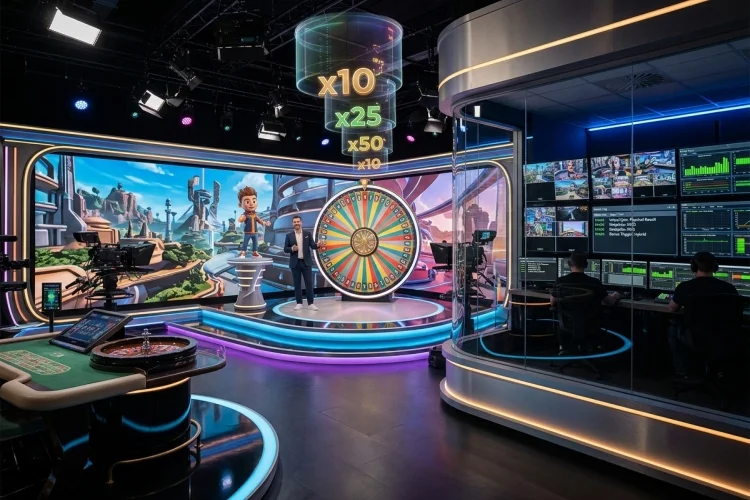
Modern live casino content is no longer limited to a dealer sitting behind a blackjack or baccarat table. Some productions now use giant wheels, virtual multipliers, animated characters, 3D bonus environments, and television-style sets.

These experiences combine physical studio action with software-generated features. To understand what technology powers live casino games and game shows, it is important to separate the different sources of an outcome.

A traditional live roulette result may come from a physical wheel and be detected electronically. A modern game show may combine a physical wheel with random-number-generated multipliers, while augmented reality adds graphics that do not physically exist in the studio.

These layers must remain synchronized so players can distinguish the real equipment, digital overlays, betting options, and final result.

The platform must also record which technology determined each part of the game. Regulatory standards emphasize clear rules, accurate data, auditability, and procedures for human or system errors.

Multi-Camera Production Creates the Live Experience

Live game shows use production methods similar to television broadcasts. Several cameras may capture the presenter, wheel, contestants, close-up results, and studio-wide action.

A production control system can switch between camera angles or combine them in a single feed. Lighting, sound mixing, graphics, and presenter cues are coordinated to create a consistent show.

Evolution describes Crazy Time as using multi-camera live action alongside augmented reality, RNG multipliers, and video-game-style components.

The visual quality does not determine the mathematical result, but it influences how clearly participants can follow the game.

OCR and Sensors Detect Physical Outcomes

Traditional card games commonly use OCR to read cards and transmit their values to the gaming platform. The system can then display those cards in the interface and calculate settlements.

Roulette and wheel-based games may use cameras, sensors, or other specialized devices to identify the winning segment. The physical event is converted into structured outcome data before the platform applies the wager rules.

GLI describes live dealer systems as translating physical transactions into data through technologies such as OCR. Its testing may include technical, system, premises, staffing, and synchronization checks.

RNG Technology Can Power Digital Elements

Not every part of a live game show must come from physical equipment. A random number generator may determine multipliers, bonus values, digital wheel results, or other software-controlled events.

The game rules should make clear which outcomes come from physical devices and which are generated electronically. RNG components are generally evaluated separately to confirm that their output meets applicable randomness and security standards.

Evolution states that some of its game shows combine physical live action with RNG-generated multipliers and augmented-reality components.

A hybrid design does not automatically make a game unfair. The important questions are whether each mechanism is approved, accurately represented, and tested.

Augmented Reality Adds Virtual Objects

Augmented reality places computer-generated images over a live video feed. A presenter may appear beside animated symbols, virtual multipliers, 3D characters, or a bonus environment that exists only on screen.

Unlike fully virtual reality, AR keeps the physical studio visible while adding digital layers. These overlays can explain results, highlight betting positions, or transform a simple wheel round into an entertainment sequence.

Evolution’s MONOPOLY Live uses augmented reality and 3D bonus rounds, while Gonzo’s Treasure Hunt includes an augmented-reality character and an optional virtual-reality mode.

The graphics must not obscure the actual result or misrepresent how a prize was determined.

Digital Wheels Combine Hardware and Software

Some game-show wheels are neither completely traditional nor fully virtual. Evolution’s DigiWheel, for example, combines a rotating digital wheel with live casino gameplay and supports video, live streaming, and interactive features.

A digital wheel can display changing segments, branded content, or promotional information while retaining a physical spinning mechanism. Its sensors and internal systems identify the final position and transfer that result to the gaming platform.

Hybrid hardware requires careful testing because the visual display, mechanical movement, detection system, and software result must remain consistent.

The Player Interface Explains Complex Rules

Game shows often contain more betting options than conventional roulette or baccarat. The interface may show base wagers, multipliers, bonus stages, statistics, and current prize values.

The interface sends player decisions to the gaming platform and displays whether each wager was accepted. It also receives result data and shows how the final payment was calculated.

GLI-19 requires live game platforms to provide appropriate rules and information, including procedures for network interruptions and possible delays between the event and its digital presentation.

Clear design is especially important when several physical and digital mechanisms operate during one round.

Synchronization Prevents Conflicting Information

The presenter’s announcement, physical wheel, AR graphics, betting interface, and settlement engine must refer to the same round. A synchronization error could otherwise show one multiplier while paying another.

Live platforms use event identifiers, timestamps, and result messages to keep each component aligned. The platform may lock betting before the physical outcome begins and reject instructions received after the official deadline.

Synchronization testing is one of the areas examined by GLI during live dealer evaluations.

Surveillance and Audit Systems Record the Game

A regulated studio should maintain enough records to investigate disputed outcomes or operational problems. These records can include surveillance footage, wager logs, outcome data, dealer actions, system events, and account transactions.

The UK Gambling Commission requires live dealer operations to be independently auditable. It also expects surveillance coverage that can establish whether the game was conducted according to documented procedures.

Access to studio systems and secure areas should be controlled. Dealers must also receive training appropriate to the games they operate.

Cybersecurity Protects the Platform

Live casino systems handle financial transactions, identity information, account balances, video delivery, and real-time communications. Each component creates potential security risks.

Encryption protects data in transit, while access controls restrict administrative and studio systems. Monitoring tools can detect unusual traffic, repeated authentication failures, unauthorized changes, or service interruptions.

The UK Gambling Commission links its remote technical security requirements to formal information-security controls designed to prevent unnecessary customer risk.

Live casino game shows combine broadcast engineering, gaming hardware, and interactive software. Cameras and production systems create the television-style stream, while OCR and sensors convert physical cards or wheel results into data.

RNG technology may determine digital multipliers or bonus elements, and augmented reality adds graphics, characters, and virtual environments.

The gaming platform connects these technologies with wagers, accounts, and settlements. Synchronization systems keep the video, overlays, results, and payments aligned, while surveillance and audit records make disputed rounds reviewable.

Before playing, read which parts of the game are physical, digital, or RNG-controlled. Verify that the operator and supplier are licensed for your jurisdiction, and remember that sophisticated technology changes the presentation – not the financial risk or underlying house advantage.